
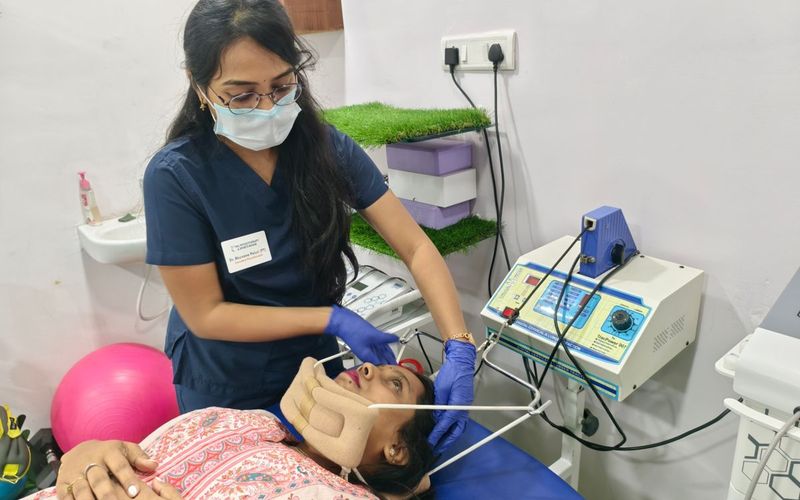
Sciatica is nerve pain that runs from your lower back or buttock down one leg, sometimes with tingling or numbness. The good news: most people get much better within 4 to 6 weeks with the right physiotherapy, gentle movement and a few changes to how they sit and ride. Only a small number of people, usually those with red-flag symptoms, need a scan or a surgeon.
Let me tell you about Karthik. (That's not his real name, but you'll probably recognise him anyway.)
He's 29, a backend developer, lives in Kothaguda and works out of a big campus near the Biodiversity junction. One Monday morning he walked into our Madhapur clinic. Actually, "walked" is generous. He was sort of leaning on the reception counter, left leg slightly bent, face full of that particular mix of pain and embarrassment.
"Ma'am, I think I slept wrong. But it's been ten days. Now it's going all the way down to my calf. Is this sciatica? Will I need surgery? My manager is asking when I'll be back in office."
Three questions in one breath. I hear some version of them almost every week. So in this post I'm going to answer them the way I answered Karthik: honestly, without scaring you, and without selling you anything you don't need.
What is sciatica, really?
Sciatica isn't a disease. It's a description. It means the sciatic nerve, the thickest nerve in your body, is irritated somewhere along its path. That nerve starts from your lower spine (the L4, L5 and S1 levels), passes through your buttock, and runs down the back of your thigh into your leg and foot.
When something presses on it or inflames it, you feel it as:
- A sharp, shooting or burning pain from the buttock down the leg, usually one side only
- Tingling, "pins and needles" or numbness in the leg or foot
- Pain that gets worse when you sit long, cough, sneeze or bend forward
- Sometimes a weak feeling in the leg, like it doesn't fully trust you
A lot of my Telugu-speaking patients describe it beautifully: "naram laagutondi", the nerve is pulling. That's exactly what it feels like.
The most common cause in the age group I see most (25 to 45) is a disc bulge at L4-L5 or L5-S1 pressing on the nerve root. In older patients it's more often spinal stenosis (narrowing of the space around the nerve). And sometimes the culprit isn't the spine at all. It's a tight piriformis muscle deep in the buttock squeezing the nerve. That one matters, because the treatment is different.
Why do so many people in Hyderabad's IT corridor get sciatica?
If you sit in Madhapur, HITEC City, Gachibowli or the Financial District for work, you're stacking the odds against your lower back in about four ways at once. I see this pattern every single week:
1. Eight to ten hours of sitting
Sitting loads your lumbar discs more than standing does, especially when you slump forward towards the laptop. Add back-to-back calls with US teams in the evening and some of my patients are sitting 11, 12 hours a day.
2. The two-wheeler and the potholes
This one is very Hyderabad. A daily ride from Kondapur to Hitech City, every speed breaker and every pothole after the monsoon, is a small jolt that goes straight up through your spine. This October, several Hyderabad spine surgeons warned in the newspapers about exactly this: long commutes, bad roads and long laptop days showing up as back and neck pain in younger and younger people. I wasn't surprised. Our appointment book had already told me.
3. Weekend warrior syndrome
Five days of sitting, then Saturday morning deadlifts at the gym or a cricket match at a ground in Gachibowli. Your back hasn't been warmed up for five days and suddenly it's asked to do everything. Karthik's pain, it turned out, started after a heavy deadlift session followed by a long bike ride to Srisailam the next day.
4. The sofa office
Work-from-home days on the sofa or the bed, laptop on the lap, back curved like a question mark. Comfortable for an hour. Terrible for a disc over months.
Can sciatica be cured permanently?
Most sciatica episodes settle completely, and physiotherapy helps them settle faster and more safely. But 'permanently' depends on you: if the sitting, lifting and weak-core habits that caused it don't change, it can come back. The goal of good physiotherapy is to fix this episode and make the next one much less likely.
I'm always honest with patients about this, because I've seen what happens when people are promised a "one-session cure". A disc that bulged because of years of poor sitting doesn't forget those years in a week.
What I can tell you is this: the large majority of people with sciatica do not need surgery. The pain usually calms down over weeks. The work in physiotherapy is to make that happen faster, to keep you moving and working while it settles, and to rebuild the strength and habits that stop it from coming back.
Does physiotherapy actually help sciatica?
Yes, and here's how, in plain words. Physiotherapy for sciatica does three jobs:
- Calm the nerve down. Gentle positions and movements that take pressure off the nerve, pain-relief modalities in the first week if you need them, and sometimes traction or manual therapy.
- Get you moving again. Bed rest used to be the advice. It isn't any more. Short, frequent, comfortable movement helps a sciatic nerve recover much better than lying flat for a week.
- Fix the reason it happened. Core and hip strength, how you sit, how you lift, how you ride. This is the part that stops the second episode, and it's the part most people skip.
Machines alone won't fix sciatica. If a clinic is only putting IFT pads on your back and sending you home, you're getting maybe a third of the treatment.
Sciatica pain relief exercises I actually give my patients
Before you try any of these, one rule. I call it the "where does the pain go" rule:
If an exercise makes your leg pain move further down your leg, stop it. If it makes the pain move up, out of the leg and towards your back, that's actually a good sign, even if your back aches a little. Physiotherapists call this centralisation.
| Exercise | How to do it | Stop if |
|---|---|---|
| Walking | 5 to 10 minutes, a few times a day, on flat ground. Not one long walk. | Leg pain builds with every step |
| Prone lying and press-ups | Lie on your stomach for 2 minutes. If that's okay, prop up on your elbows. Later, gentle press-ups with hands, hips staying down. | Pain moves further down the leg |
| Single knee to chest | Lying on your back, gently hug one knee towards your chest, hold 20 seconds, switch. | Sharp pain in the leg |
| Glute bridge | Lying on your back, knees bent, squeeze your buttocks and lift your hips a few inches. 10 slow reps. | Pain shoots into the leg |
| Sciatic nerve glide | Sitting tall, slowly straighten the painful knee while lifting your head up, then bend the knee as you look down. Gentle, 10 reps. It should feel like a gentle stretch, not a pull. | Tingling increases or lasts after you stop |
| Figure-4 (piriformis) stretch | Only if your problem is piriformis-related. Lying down, cross the ankle over the opposite knee and gently pull the thigh in. | It makes the back pain worse |
Exercises to avoid in the first couple of weeks
- Toe-touches with straight knees. They stretch an already irritated nerve.
- Aggressive hamstring stretching. Same problem. Tight-feeling hamstrings in sciatica are often the nerve, not the muscle.
- Sit-ups and crunches. Lots of disc pressure, not much benefit.
- Heavy deadlifts, squats and leg press. Not forever. Just until we've rebuilt the base.
How should I sit at my desk with sciatica?
Sit with your hips slightly higher than your knees, a small rolled towel behind your lower back, feet flat, screen at eye level, and get up every 30 minutes. And take your wallet out of your back pocket.
I'm serious about the wallet. A thick wallet in the back pocket tilts your pelvis and presses on the piriformis and sciatic nerve for hours. We have a name for it: "wallet sciatica". I've had software engineers improve noticeably just from moving their wallet to the front pocket.
Here's the desk checklist I give everyone from the tech parks around us:
- Chair height so your hips are a little above your knees
- A rolled towel or lumbar cushion in the small of your back
- Laptop on a stand with a separate keyboard, screen top at eye level
- Feet flat on the floor or a footrest, not tucked under the chair
- Stand up every 30 minutes. Refill water, take the call standing, walk to a colleague's desk instead of pinging them
- If you have a standing desk, alternate 30 to 45 minutes sitting with 15 minutes standing
And on the road
For the first couple of weeks, try to avoid long two-wheeler rides, and especially sitting pillion on bumpy roads. In a cab, recline the seat slightly (around 100 to 110 degrees) and put a cushion behind your lower back. If you drive, stop every 45 minutes on longer trips.
When does sciatica need a scan or a surgeon?
Most sciatica doesn't need an MRI on day one. But some symptoms are red flags, and if you have any of these, please don't wait for a physiotherapy appointment. See a doctor or go to emergency the same day:
- Numbness around the groin, inner thighs or "saddle" area
- New trouble passing urine or controlling your bladder or bowels
- Leg weakness that's getting worse, or your foot slapping or dragging while you walk (foot drop)
- Sciatica in both legs at the same time
- Back pain with fever, unexplained weight loss or a history of cancer
- Pain that started after a fall or accident
At our clinic, the first thing we do in a sciatica assessment is check for these: your reflexes, sensation and muscle strength in both legs. If anything worries me, I'll tell you straight away and refer you to a spine surgeon. Not sure who you should even see first? I've written a separate guide on choosing between a physiotherapist, an orthopaedic doctor and a chiropractor.
How we treat sciatica at PAL Physiotherapy
Every plan starts with a proper assessment, around 45 minutes, so we know whether we're dealing with a disc, stenosis or piriformis. Then we pick from these:
| What we use | Why | When |
|---|---|---|
| Manual therapy and spinal mobilisation | Eases stiffness and protective spasm around the irritated level | Usually from the first or second session |
| Spinal traction | Gently unloads the disc and nerve root in selected disc cases | When the assessment shows it suits you |
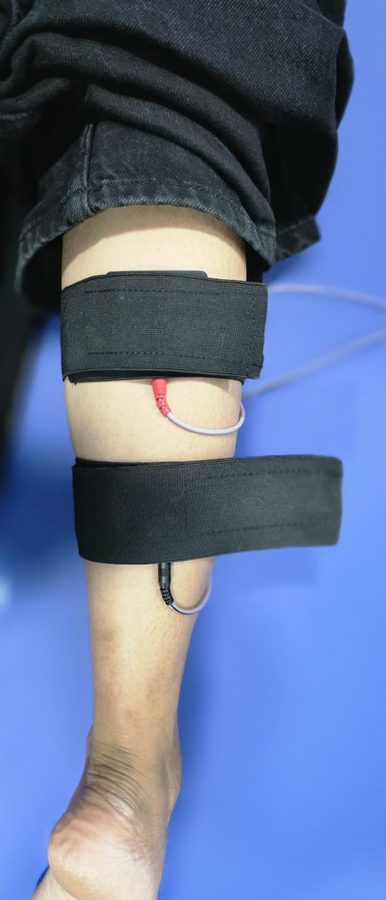
| IFT or TENS | Short-term pain relief so you can move and exercise | Early sessions only, never on their own |
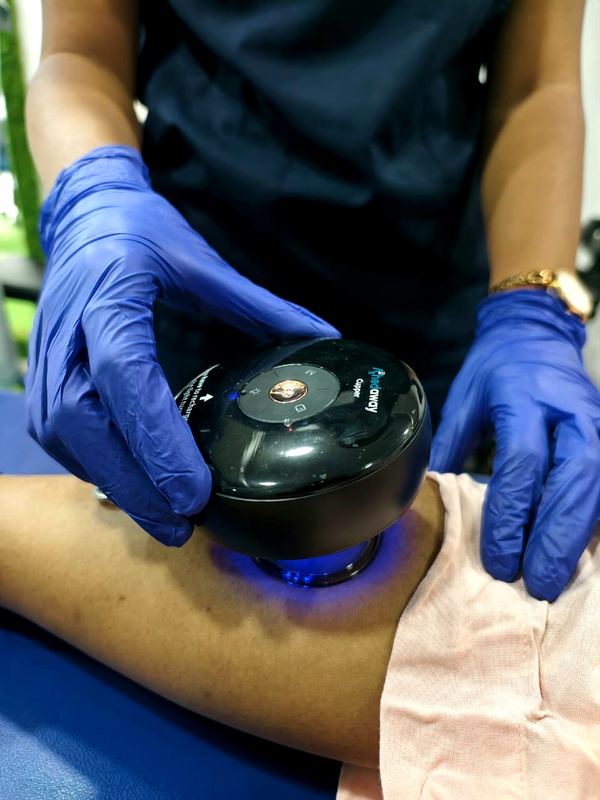
| Dry needling, myofascial release or cupping | Releases tight glute, piriformis and hamstring muscles along the nerve's path | Especially for piriformis-type sciatica |
| Exercise progression | Core, hip and back strength so it doesn't come back | Every session, plus a short home routine |
| Desk and commute coaching | Fixes the habits that caused it | Woven through the whole plan |
How many sessions will I need, and what does it cost?
Most of my sciatica patients need somewhere between 6 and 12 sessions over 3 to 6 weeks. Many people feel a clear difference within the first 3 or 4. A long-standing problem, or one with numbness and weakness, can take longer.
| Phase | What's happening | Typical sessions |
|---|---|---|
| Calm-down (week 1 to 2) | Reduce leg pain, find comfortable positions, keep you moving | 2 to 3 per week |
| Rebuild (week 2 to 4) | Nerve glides, core and hip strength, desk changes | 2 per week |
| Return (week 4 to 6+) | Gym, sport, long rides, lifting, a home plan to keep it away | 1 per week, then as needed |
For actual rupee figures across Hyderabad, and how to avoid paying twice by stopping too early, read my guide to physiotherapy cost in Hyderabad.
What happened to Karthik?
Week 1: his leg pain was 8 out of 10, and he couldn't sit for more than 15 minutes. His assessment showed an L5-S1 disc irritation with no red flags. We started with positions that eased the leg pain, short walks, and a couple of sessions of manual therapy and IFT.
Week 3: the pain had "moved up". It was mostly in his lower back now and barely in the calf. That's the centralisation I talked about, and it's exactly what we want to see. He was back in office, with his laptop on a stand and his wallet in his front pocket.
Week 6: he walked the full Durgam Cheruvu loop without leg pain and was back in the gym, deadlifting light, with proper hip-hinge form. We moved him to a home programme with a check-in after a month.
No surgery. No injection. Just the boring, consistent stuff that works.
Sciatica treatment near HITEC City, Madhapur and Kondapur
We have two clinics in Hyderabad, Telangana, both open every day from 7 AM to 9 PM, which helps if you want to come before standup or after your last call:
- Madhapur clinic, Vittal Rao Nagar: easy from HITEC City, Ayyappa Society, Kavuri Hills, Jubilee Hills and Kothaguda.
- Kondapur clinic, Sri Ramnagar Block C: handy for Gachibowli, Raidurg, Nanakramguda and the Financial District.
Key takeaways
- Sciatica is nerve pain down the leg, most often from a disc in people under 45.
- Most cases settle in 4 to 6 weeks, and most don't need surgery.
- Keep moving, follow the "where does the pain go" rule, and fix your desk and commute.
- Saddle numbness, bladder or bowel changes, or worsening weakness means see a doctor the same day.
- Don't stop treatment the day the leg pain eases. That's when the strengthening starts.
Services that help with sciatica
Talk to us about your sciatica
We're open every day, 7 AM to 9 PM, in Madhapur and Kondapur. Tap to call, or get directions straight to the clinic.
Madhapur: Plot No. 1-89/A/3/15, Vittal Rao Nagar · Kondapur: Street No. 11, Sri Ramnagar Block C, beside Charminar Biriyani
The patient stories in this article are composites of the kinds of cases we see every week at our clinics; names and identifying details have been changed for privacy. This article is general information and isn't a substitute for an in-person assessment. Last reviewed: October 27, 2026.