 Please wait...
Find answers to common questions about physiotherapy treatments, benefits, and what to expect during your sessions at our PAL Physiotherapy clinics in Hyderabad.

Learn more about physiotherapy treatments, benefits, and how they can help with your specific condition.
Physiotherapy is a healthcare practice that helps individuals recover from injuries, manage pain, and improve mobility through targeted exercises, manual therapy, and rehabilitation techniques. It is commonly used to treat musculoskeletal conditions, neurological disorders, and post-surgical recovery.
At PAL Physiotherapy, our experienced physiotherapists use evidence-based approaches to assess your condition and develop personalized treatment plans that address your specific needs and goals.
Physiotherapy offers numerous benefits for patients with various conditions:
Our physiotherapists at PAL Physiotherapy create comprehensive treatment plans that address both the symptoms and underlying causes of your condition.
Physiotherapy plays a crucial role in overall health and well-being for several reasons:
At PAL Physiotherapy, we believe in a holistic approach that considers your overall health and wellness goals, not just symptom relief.
Physiotherapists are highly trained healthcare professionals specializing in physical rehabilitation, pain management, and mobility improvement. However, they are not medical doctors (MDs).
Physiotherapists hold professional degrees such as a Bachelor's of Physiotherapy (BPT) or Doctorate in Physiotherapy (DPT). They undergo extensive education and clinical training in anatomy, physiology, kinesiology, and therapeutic techniques.
At PAL Physiotherapy, our team is led by Dr. Bhuvana, a qualified physiotherapist with extensive experience in orthopedic and sports physiotherapy. While we work in collaboration with physicians, our specialized focus is on movement, function, and rehabilitation.
No. In India you can book a physiotherapist directly, without a doctor's referral. If you already have X-rays, MRI scans, prescriptions or a surgery discharge summary, please bring them to your first visit. If our assessment shows you need a scan, medicines or a surgeon's opinion first, we'll tell you and refer you.
Physiotherapy shouldn't be painful. Some techniques, like deep tissue release, stretching a stiff joint or dry needling, can feel uncomfortable for a few seconds, and you may feel a mild ache after exercise, like after a gym session. Your physiotherapist works within your comfort level and adjusts the pressure or exercises if anything feels too sharp.
Most sessions at PAL Physiotherapy last 45 to 60 minutes. The first visit includes a detailed assessment, so plan for about an hour. Follow-up sessions combine hands-on treatment, exercises and, where useful, pain-relief modalities.
Wear loose, comfortable clothes: shorts or track pants for knee, hip or ankle problems, and a loose T-shirt for shoulder or neck problems. Bring any X-rays, MRI or CT reports, prescriptions and surgery discharge summaries you have.
For most sprains, strains and sports injuries, it helps to see a physiotherapist within the first few days. Early treatment reduces swelling, protects the injured area and prevents stiffness. If you can't put weight on the limb, see a doubled-up joint, or have severe swelling after a fall, get an X-ray or see a doctor first to rule out a fracture.
For most back, neck, shoulder or knee pain without a major injury or red-flag symptoms, a physiotherapist is a good first stop. See an orthopaedic doctor first after a fall or accident, if you may have a fracture, or if you have leg weakness, numbness in the groin or bladder changes. Read our full guide: Physiotherapist, orthopaedic doctor or chiropractor: who to see first.
The best physiotherapy approach for lower back pain typically includes a combination of:
At PAL Physiotherapy, we develop personalized lower back pain treatment plans based on the specific cause of your pain and your individual needs. Our approach often includes dry needling and cupping therapy for added benefits.
Your first physiotherapy session at PAL Physiotherapy will typically include:
Initial sessions typically last 45-60 minutes. We recommend wearing comfortable clothing that allows for movement and provides access to the area being treated.
The number of physiotherapy sessions required varies based on several factors:
At PAL Physiotherapy, we continuously assess your progress and adjust your treatment plan accordingly. Our goal is to help you achieve your maximum potential in the most efficient way possible. Most patients begin to see improvements within 3-4 sessions.
Dry needling uses very thin, sterile, single-use needles to release tight muscle knots (trigger points) that cause pain and stiffness. It's different from acupuncture, which is based on traditional Chinese medicine. When performed by a trained physiotherapist after a proper assessment, it's a safe and widely used technique. Learn more about dry needling at PAL.
Cupping uses suction cups to lift and stretch tight skin, fascia and muscle, improving blood flow and easing muscle tension. It often leaves round, painless marks that fade within a few days. We use it alongside exercises and manual therapy, not on its own. See cupping therapy.
IFT (interferential therapy) is a pain-relief treatment that passes a gentle electrical current through the painful area using pads on the skin. It feels like a mild tingling and helps reduce pain and muscle spasm, especially in back, neck and knee pain. It works best as a support to exercise and hands-on treatment. See IFT therapy.
Kinesio taping uses stretchy, breathable tape applied in specific patterns to support muscles and joints, reduce swelling and ease pain, without restricting movement. It's commonly used for sports injuries, knee and shoulder pain, and during pregnancy. See kinesio taping.
No. At PAL, chiropractic-style spinal manipulation is performed by our qualified physiotherapists (BPT/MPT), after a full assessment and always as part of a plan that includes exercise. India has no recognised chiropractic degree, so we use these techniques within physiotherapy. See chiropractic-style treatment.
Yes. We offer home physiotherapy across areas near our clinics, including Madhapur, Kondapur, HITEC City, Gachibowli, Kothaguda, Jubilee Hills and Kavuri Hills. It's especially useful after surgery, for elderly patients and for people who can't travel. Charges depend on distance, so call +91 8639398229 with your area.
Yes. Online consultations are useful for follow-ups, posture and workstation advice, home exercise programmes, and for patients who live far away. Some problems need a hands-on assessment, so we'll tell you if an in-person visit is better.
Yes, physiotherapy is one of the most effective treatments for back pain. A physiotherapist can assess the underlying cause of the pain and develop a customized treatment plan, which may include:
At PAL Physiotherapy, we've successfully treated many patients with various types of back pain, from acute injuries to chronic conditions like sciatica and disc problems. Our holistic approach addresses both immediate pain relief and long-term prevention.
Physiotherapy can significantly reduce knee pain by addressing its underlying causes. Our approach includes:
Physiotherapy is particularly effective for knee conditions such as:
At PAL Physiotherapy, we develop personalized knee rehabilitation programs that address your specific condition and goals.
Physiotherapy is highly effective for treating neck pain from various causes. Our comprehensive approach includes:
Common neck conditions we successfully treat include:
At PAL Physiotherapy, we focus not just on relieving your current neck pain but also on preventing its recurrence through sustainable lifestyle changes and self-management strategies.
Physiotherapy cannot "cure" paralysis, but it plays a crucial role in rehabilitation and quality of life improvement. Our neurological rehabilitation approach focuses on:
Early intervention and consistent therapy can lead to significant improvements, especially for conditions like:
At PAL Physiotherapy, our neuro-rehabilitation specialists work closely with patients and their families to develop realistic goals and comprehensive treatment plans for neurological conditions.
Without treatment, frozen shoulder can take 1 to 3 years to fully settle as it passes through three stages: freezing, frozen and thawing. With regular physiotherapy, most people get back to comfortable daily activities within a few months, although full movement can take longer, especially with diabetes. Read our frozen shoulder guide.
Yes. Most sciatica improves within 4 to 6 weeks with physiotherapy, gentle movement and changes to sitting and commuting habits, and most people never need surgery. See a doctor urgently if you have numbness in the groin, bladder or bowel changes, or worsening leg weakness. Read our sciatica guide.
Usually within 24 hours of surgery, in hospital. After discharge, most people need about 15 to 30 physiotherapy sessions over 6 to 12 weeks, plus daily home exercises, and full recovery takes 6 to 12 months. Read our week-by-week knee replacement recovery guide.
Yes. Vestibular rehabilitation, a specialised form of physiotherapy, is very effective for many types of vertigo, including BPPV (vertigo when you turn in bed or look up). It includes repositioning manoeuvres, balance training and gaze exercises. See vertigo rehabilitation.
Yes. Physiotherapy is a core part of stroke recovery. It helps restore movement, balance, walking and independence, and works best when started early and done consistently. We also train family members so progress continues at home. See neuro physiotherapy.
Yes, in most cases. Desk-related neck pain usually comes from forward head posture, long sitting and weak neck and upper-back muscles. Physiotherapy combines hands-on treatment, strengthening and workstation changes to fix it and stop it coming back. See posture and ergonomics physiotherapy.
Most neighbourhood physiotherapy clinics in Hyderabad charge about ₹700 to ₹1,500 per session in 2026, and hospital physiotherapy departments range from about ₹700 to ₹2,500 depending on what's included. At PAL Physiotherapy, the first consultation is ₹500, and you'll know the session fee and an estimated number of sessions before treatment starts. Read our physiotherapy cost guide.
No. The consultation at PAL Physiotherapy is ₹500, but if you go ahead with your treatment sessions with us after the consultation, the consultation fee is waived. You only pay for your sessions.
Rather than the cheapest per-visit price, look for one-on-one time with a qualified physiotherapist, a clear diagnosis and a plan with an estimated number of sessions. A slightly higher fee that fixes the problem in 6 sessions costs less than a cheap fee that takes 20.
For many common problems, such as back pain, neck pain, sciatica or knee arthritis, 12 sessions is usually enough when combined with home exercises. Frozen shoulder and post-surgical rehab often need more. If you're not improving after 4 to 6 sessions, ask for a reassessment.
Short daily sessions can help in the first week of a severe flare-up or right after surgery. After that, 2 to 3 sessions a week plus a home exercise programme usually works better than daily visits.
Physiotherapy during a hospital admission is usually covered as part of the hospital bill. Outpatient physiotherapy at a clinic is covered only if your policy includes OPD benefits, which many corporate policies do and many basic policies don't. Check with your insurer or TPA. We provide itemised bills for claims.
Government hospitals such as Gandhi Hospital and Osmania General Hospital have physiotherapy departments with very low charges, and ESI hospitals serve ESI members. Expect longer waits and less one-on-one time than at a private clinic.
Both our Madhapur and Kondapur clinics are open every day, including weekends, from 7:00 AM to 9:00 PM, so you can come before work or after office hours.
Call or WhatsApp us on +91 8639398229, or use the booking form on our website. You don't need a doctor's referral. Tell us which clinic you prefer, Madhapur or Kondapur, or if you'd like a home visit.
Yes. Our Madhapur clinic has dedicated parking space for patients, which is rare in busy Madhapur. Parking is also available near our Kondapur clinic.
We have two clinics in Hyderabad, Telangana: Madhapur at Plot No. 1-89/A/3/15, beside Siddarth Fitness gym, near Gowra Tulips, Vittal Rao Nagar (500081), and Kondapur at Street No. 11, beside Charminar Biriyani Shop, Sri Ramnagar Block C (500084). See our Madhapur clinic and Kondapur clinic pages.
From HITEC City, Madhapur, Ayyappa Society and Kavuri Hills, our Madhapur clinic in Vittal Rao Nagar is usually closest. From Kondapur, Kothaguda, Gachibowli and Hafeezpet, our Kondapur clinic in Sri Ramnagar is usually quicker.
Yes. Our Madhapur clinic is about 1.5 km from Kavuri Hills, roughly a 6-minute drive, and about 5 km from Jubilee Hills Check Post via Road No. 36. We also offer home visits in both areas. See physiotherapy near Jubilee Hills and physiotherapy near Kavuri Hills.
Yes. Patients from Nanakramguda, Kothaguda, Raidurg and the Financial District visit both our clinics, and we offer home visits in these areas. See Nanakramguda and Kothaguda.
Our experienced team at PAL Physiotherapy is ready to address your specific concerns and help you on your journey to recovery.
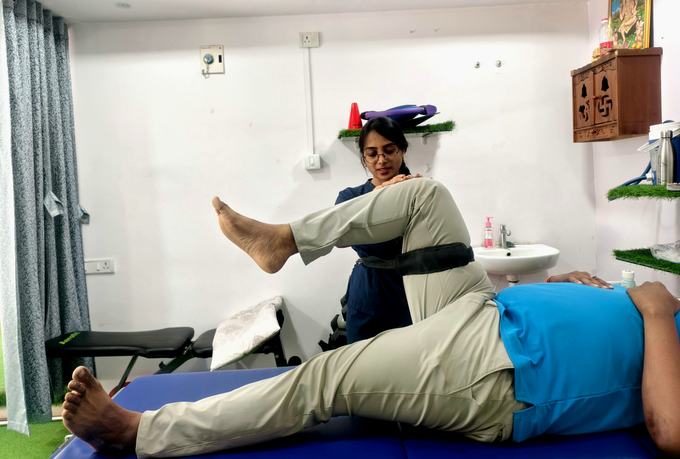
Expert treatment for joint, muscle, and bone conditions. We specialize in back pain, knee pain, shoulder injuries, and post-surgical rehabilitation.
Learn More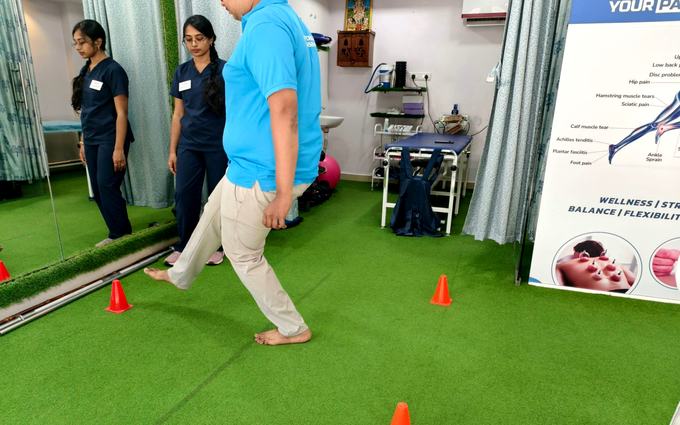
Specialized care for athletes of all levels. Our sports physiotherapy programs focus on injury recovery, performance enhancement, and injury prevention.
Learn More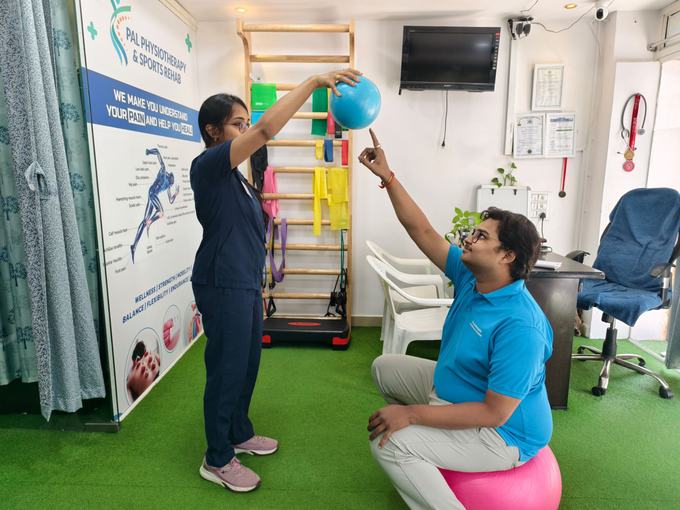
Comprehensive care to improve mobility and function for neurological conditions like stroke, Parkinson's, and spinal cord injuries.
Learn MoreLet our expert physiotherapists at PAL Physiotherapy help you achieve a pain-free, mobile life.
© PAL Physiotherapy. All rights reserved. | Privacy Policy